Alkaline water and hydrogen-enriched water: what sets them apart
"Alkaline water" and "hydrogen-enriched water" describe two different physical quantities. The first refers to pH — the acidity of the solution. The second refers to the amount of molecular hydrogen (H₂) dissolved in the water. A water can have a high pH with no dissolved hydrogen, and the other way round. The confusion arises because electrolysis changes both at once.
Alkaline water
"Alkaline" refers to pH — a logarithmic scale of the concentration of hydrogen ions in a solution. Water with a pH above 7 is, by definition, alkaline; below 7 it is acidic. Because the scale is logarithmic, a difference of one pH unit means a tenfold difference in hydrogen ion concentration.
Ordinary drinking water has a pH that varies with the source and with treatment. The variation is normal and does not, in itself, indicate superior or inferior quality.
The defining characteristic of alkaline water is therefore a value on the pH scale. It can arise naturally, from the mineral composition of the source — waters passing through limestone tend towards higher values — or through treatment, including electrolysis or mineral addition.
One detail often lost in the discussion: the pH of a water is not a stable property. Exposure to air changes the equilibrium of dissolved carbon dioxide, and the pH shifts. A measurement taken at the tap and one taken an hour later, in a glass, can give different values for the same water.
Hydrogen-enriched water
"Hydrogen-enriched" refers to the presence of dissolved molecular hydrogen (H₂) in the water. It describes a dissolved gas, not acidity. A water can contain dissolved hydrogen regardless of its pH, and a water with a high pH does not, by that fact, contain hydrogen.
Hydrogen is the smallest molecule that exists and has low solubility in water. The direct consequence: dissolved hydrogen is volatile — the concentration falls over time as the gas leaves the solution, including through the walls of many plastics.
For that reason, processes that aim for hydrogen to be present in the glass produce it close to the moment of consumption, not at bottling. A container that is stored and transported is not an environment in which dissolved hydrogen stays at the value it had when filled.
Why the two are confused
The confusion has a technical explanation, not merely a commercial one.
Electrolysis of water breaks down water molecules at the two electrodes, with different products: hydrogen is released at the cathode, and the solution in that region becomes more alkaline; oxygen is released at the anode, and the solution there becomes more acidic. A device that produces hydrogen by electrolysis therefore also produces, at the same time, a change in pH in the same region.
The two effects appear together in the same process, but they remain distinct quantities: one is measured in pH units, the other in concentration of dissolved H₂, usually in milligrams per litre or parts per million. That they appear together does not make them synonymous, just as a coffee being hot and bitter does not make temperature a measure of taste.
The term "ionised water", often used as a third synonym, refers to the same electrolysis process and inherits the same ambiguity.
The legal status of the claims
Neither alkaline water nor molecular hydrogen has an authorised health claim in the European Union. The list of permitted claims is the one in Regulation (EU) No 432/2012, and the general framework is Regulation (EC) No 1924/2006. The list is exhaustive: what does not appear on it cannot be used commercially.
The only authorised claim applicable to water concerns its contribution to the maintenance of normal physical and cognitive functions, at a minimum of 2 litres a day from all sources.
This means that any commercial material attributing a health effect to alkaline water, to hydrogen water or to ionised water falls outside the framework — regardless of what the published studies on the subject say.
On pH and ORP as selling arguments
pH and oxidation-reduction potential (ORP) values are measurable quantities, and measuring them is a legitimate technical check.
Publishing them as a selling argument raises a substantive problem, however: a figure printed on commercial material means nothing to a buyer unless it suggests a benefit. And suggesting an unauthorised benefit falls under the regulation on health claims, including through the implicit form set out in Article 10(3).
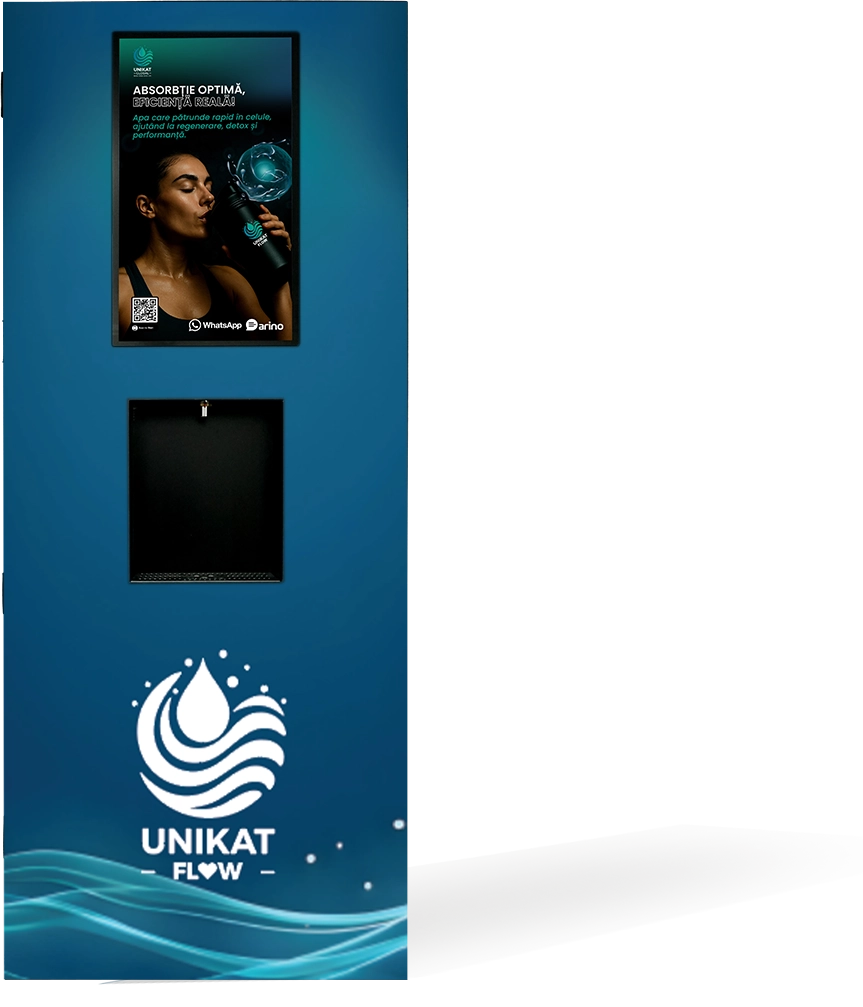
Unikat Flow does not publish such values. We describe what the machine does — filtering, chilling, passing through an electrolysis chamber, preparation at the moment of serving — without attributing a health effect to the process.
Key points
- pH and dissolved hydrogen are different quantities, measured in different units.
- Electrolysis changes both, which is why they appear together in the discussion.
- Dissolved hydrogen falls over time; it is not preserved by bottling as it is by preparation.
- Neither alkaline water nor hydrogen has an authorised claim in the EU.
- The only claim applicable to water concerns normal physical and cognitive functions, at 2 l/day from all sources.
Sources
- Regulation (EC) No 1924/2006 on nutrition and health claims made on foods — EUR-Lex, CELEX 32006R1924
- Regulation (EU) No 432/2012 establishing a list of permitted health claims — EUR-Lex, CELEX 32012R0432
- EFSA, EFSA Journal 2011;9(4):2075, doi:10.2903/j.efsa.2011.2075